You’re tired of running your service business. There’s a better way. It’s time to free yourself from being a slave to your business.
Learning to master the digital landscape is essential. It turns your business into a system that makes money without taking over your life. In today’s online world, having a good plan is key to success.
Let’s get to the point. You need a strong digital marketing strategy to grow your business.
Key Takeaways
- Transform your business into a systematized entity.
- Break free from being a slave to your business.
- Master the digital landscape for success.
- Develop a solid online strategy.
- Improve profitability without consuming your life.
Understanding the Importance of Digital Strategy
To succeed today, knowing about digital strategy is key. You can’t improve what you don’t measure. A good digital strategy lets you set goals and see how you’re doing.
“You can’t improve what you don’t measure.” This saying is very true online, where data rules. A digital strategy helps you know what success means for your business. It could be more website visitors, more social media engagement, or more leads.
Defining Digital Success
First, you need to know what success looks like for your business. You must set goals and figure out how to measure them. This means setting clear, reachable goals that match your business’s mission.
For example, if you want more website visitors, you might use SEO, content marketing, and social media. If you want to sell more, focus on email marketing and making your website better for sales.
The Role of Data in Digital Strategy
Data is the heart of a good digital strategy. It shows what your customers like and what they need. By using data, you can make smart choices to grow your business.
Using data helps you see how you’re doing, find what needs work, and change your plan. It’s about being quick to adapt to the digital world.
Digital vs. Traditional Marketing
Understanding digital vs. traditional marketing is key in a digital strategy. Traditional marketing is often a guess, based on broad groups. Digital marketing is precise and measurable, letting you target your audience better.
Digital marketing is more precise and accountable than traditional marketing. With digital channels, you can see how your campaigns do right away. This lets you make quick changes to get better results.
As
“The best marketing doesn’t feel like marketing.”
This quote shows the value of a smooth user experience. A good digital strategy uses the right tech, creativity, and data to make this happen.
Key Digital Marketing Channels
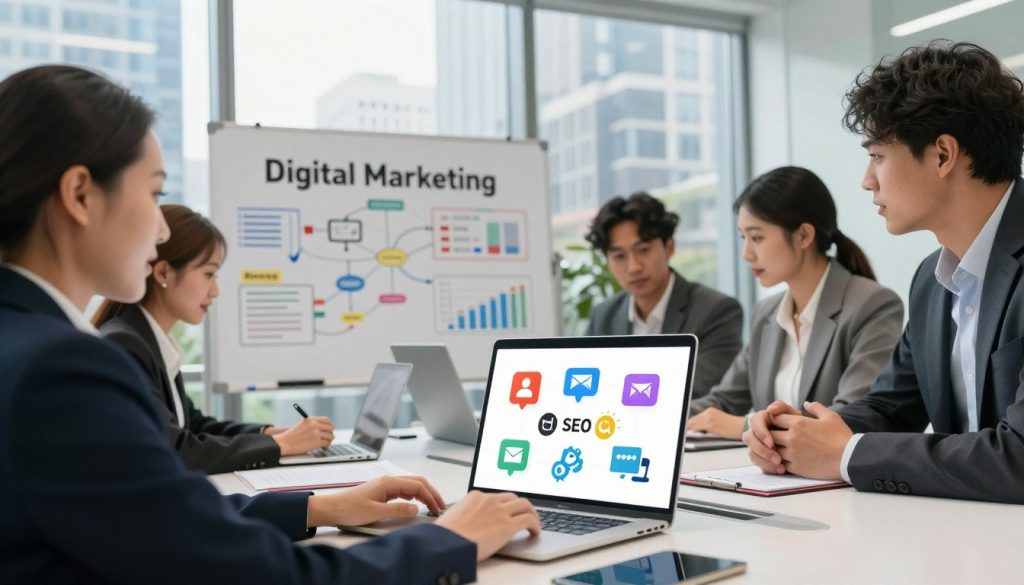
Knowing which digital marketing channels to use is key. You should be where your customers are, like on social media or in their email. This is where they spend their time online.
Social Media Marketing
Social media marketing is more than just posting. It’s about creating a community and engaging with your audience. You must pick the right platforms for your business, like Facebook, Instagram, LinkedIn, or Twitter.
For example, if you’re targeting younger people, Instagram and TikTok are good choices. LinkedIn is better for B2B marketing. The important thing is to know your audience and make content that speaks to them.
Email Marketing
Email marketing is very effective. It’s direct, personal, and can be very targeted. You can nurture leads, promote products, and build loyalty through email campaigns.
To succeed in email marketing, segment your audience and make content that’s relevant to each group. This means sending different emails to new subscribers and long-time customers.
SEO and Content Marketing
SEO and content marketing work together. By making high-quality, keyword-rich content, you can boost your search engine rankings. This helps drive more organic traffic to your site. Learn how to use AI for small businesses to optimize your content.
Content marketing is more than just blogging. It’s about making valuable content that meets your audience’s needs. This could be videos, podcasts, or webinars. The goal is to provide value and show your brand as a leader in your field.
Building a Strong Online Presence
Your business’s first impression is often online. Make sure it’s a good one. You need a digital presence that thrives, showing off your brand and encouraging action.
Crafting Your Brand Identity
Your brand identity is more than a logo or colors. It’s your business’s personality. It shows how you communicate, your values, and what you promise to customers.
To create a strong brand identity, know your mission, understand your audience, and keep your promises. A study by Forrester shows brands with a strong identity can outperform by up to 20%. That’s a clear call to action.
“Your brand is what other people say about you when you’re not in the room.”
- Define your brand’s mission and values.
- Understand your target audience inside and out.
- Consistency is key; ensure your brand message is uniform across all platforms.
Website Optimization Essentials
A great brand identity needs a strong online presence. Your website is often the first contact with customers. It must be user-friendly and optimized for search engines.
Key elements of website optimization include:
| Element | Description | Importance |
|---|---|---|
| Page Speed | Ensuring your site loads quickly | High |
| Mobile Responsiveness | Making sure your site works on all devices | High |
| SEO | Optimizing your content for search engines | High |
| Clear Navigation | Making it easy for users to find what they need | Medium |
Innovation in web development changes how we use websites. Stay ahead by using the latest trends and technologies in your web development.
By focusing on a strong brand identity and website optimization, you’ll build a powerful online presence. This will drive results in digital marketing.
Leveraging Social Media for Growth
Smart social media strategies can boost your business. You must be where your customers are and engage with them meaningfully.
Choosing the Right Platforms
You can’t be everywhere at once. So, focus on the platforms where your audience is most active. Each platform has its own users and how they use it.
For example, Instagram is great for visually driven businesses. LinkedIn is better for reaching professionals.
Creating Engaging Content
After picking your platforms, create content that connects. Your content should be a mix of promotional, educational, and entertaining posts that add value.
- Use high-quality visuals to capture attention.
- Craft compelling captions that drive engagement.
- Utilize stories and reels to share behind-the-scenes content.
Analyzing Social Media Metrics
You can’t improve what you don’t measure. Track your social media metrics to see what works and what doesn’t.
Watch engagement rates, follower growth, and conversions. Tools like Hootsuite or Sprout Social can help.
By regularly checking your metrics, you can adjust your strategy to optimize your results. This ensures your social media helps your business grow.
An Introduction to SEO Basics
To succeed in digital marketing, you must understand SEO basics. You need to make your website visible to search engines. This is where SEO comes in.
SEO is more than just using keywords. It’s about creating a strategy that works for your business. You need to think like your customers. What are they searching for? What problems are they trying to solve?
Understanding Keywords and Search Intent
Keywords are the words and phrases your target audience uses when searching for products or services like yours. But it’s not just about identifying the right keywords. You need to understand the intent behind those searches. Are people looking to buy, or are they seeking information?
For example, if you sell outdoor gear, your customers might search for “best hiking boots” or “outdoor gear reviews.” You need to create content that matches their search intent. This could be a product page for hiking boots or a blog post reviewing outdoor gear.
| Keyword Type | Search Intent | Content Strategy |
|---|---|---|
| Informational | User seeking information | Create detailed guides or blog posts |
| Transactional | User ready to buy | Optimize product pages or create landing pages |
| Commercial | User comparing products | Develop comparison charts or review content |
On-Page vs. Off-Page SEO
SEO can be broadly categorized into two areas: on-page SEO and off-page SEO. On-page SEO refers to optimizing elements on your website to improve search engine rankings. This includes optimizing your content, meta tags, headings, and internal linking.
Off-page SEO involves activities outside your website that impact your rankings. This includes building high-quality backlinks from other reputable sites, social media marketing, and more.
To illustrate the difference, consider this: on-page SEO is like preparing your house for sale by decluttering and staging it. Off-page SEO is like telling all your friends and neighbors about the amazing house you’re selling. Both are essential for a successful “sale”—or in this case, a high search engine ranking.
The Power of Content Marketing
To grab your audience’s attention and build loyalty, a strong content marketing plan is key. Content marketing is more than just a trend; it’s a powerful way to connect with your audience and grow your business.
Done right, content marketing can really boost your online presence. It drives engagement and conversions. It’s about creating content with a clear strategy.

Types of Content That Convert
Not all content works the same. Some types are better at turning leads into customers. Here are a few that work well:
- Blog posts that offer valuable insights and information
- Videos that show off products or share customer stories
- Infographics that make data fun and easy to see
- Podcasts that dive deep into industry topics
To get the most out of your content, know your audience well. Tailor your content to what they need and like.
Crafting a Content Calendar
A content calendar is a must-have for planning your content. It keeps your content consistent and avoids last-minute rushes.
| Content Type | Frequency | Platform |
|---|---|---|
| Blog Posts | Weekly | Company Website |
| Social Media Updates | Daily | Twitter, Facebook, LinkedIn |
| Email Newsletters | Monthly |
Planning your content ahead ensures a strategy that meets your business goals. It also connects with your audience.
Effective content marketing is an ongoing effort. It needs constant innovation and change. Stick to your content plan, and you’ll see your online presence grow. You’ll also build a loyal customer base.
Analyzing Performance with Digital Analytics
Measuring your digital success is more than just guessing. It requires a deep look into digital analytics. You must see how users interact with your site, what leads to sales, and where you lose customers.
Digital analytics is about more than just numbers. It’s about getting insights that help you grow. By analyzing your data well, you can find ways to improve and boost your online presence.
Key Metrics to Track
To really understand your digital performance, track the right metrics. Here are some key ones:
- Website Traffic: Knowing how many visitors you get and where they come from.
- Conversion Rates: Seeing how many visitors take the action you want.
- Bounce Rates: Finding pages where visitors leave quickly.
- Average Session Duration: Checking how engaging your content is by seeing how long visitors stay.
| Metric | Description | Importance |
|---|---|---|
| Website Traffic | Total number of visitors | High |
| Conversion Rates | Percentage of visitors who convert | High |
| Bounce Rates | Percentage of visitors who leave immediately | Medium |
| Average Session Duration | Average time spent on the site | Medium |
Tools for Effective Analysis
To analyze these metrics well, you need the right tools. Some top digital analytics tools include:
- Google Analytics: A detailed tool for tracking website traffic, behavior, and conversion.
- SEMrush: An all-in-one tool for SEO, competitor analysis, and content optimization.
- Hotjar: A tool for understanding user behavior through heatmaps and session recordings.
By using these tools and tracking key metrics, you can understand your digital performance better. This helps you make smart decisions to move your business forward.
Future Trends in the Digital Landscape
The digital world is on the verge of a big change. This change comes from new tech and how people act online. It’s key to know what’s coming in digital marketing.
The Impact of AI and Automation
AI and automation are changing digital marketing. They help with customer service and predict what people might want. This makes marketing better and more personal.
Key Applications of AI in Digital Marketing:
- Predictive analytics for targeted marketing
- Chatbots for customer service
- Content generation and optimization
Emerging Technologies
New tech like AR, VR, and blockchain will change digital marketing. They let us connect with customers in new ways. They offer deep, engaging experiences.
| Technology | Potential Impact | Current Status |
|---|---|---|
| Augmented Reality (AR) | Enhanced customer experience through interactive and immersive experiences | Growing adoption in retail and gaming |
| Virtual Reality (VR) | Revolutionizing how consumers interact with brands through fully immersive environments | Increasing use in entertainment and education |
| Blockchain | Improving transparency and security in digital transactions | Early adoption in finance and supply chain management |
As these techs grow, businesses must keep up. They need to use these new tools in their marketing plans.
Building a Digital Marketing Team
You’ve reached a key point. You know digital strategy is vital, and you’re familiar with digital marketing channels. Now, it’s time to build a team for your digital marketing efforts.
Key Roles for a Digital Marketing Team
To succeed in digital marketing, you need a team with diverse skills. A web development expert is key for website optimization and maintenance. A social media specialist is also essential for creating engaging content and analyzing metrics.
You’ll also need a content creator who can make content that connects with your audience.
Skills for the Future
As digital marketing evolves, your team must stay ahead. Skills in data analysis, SEO, and online campaign management are vital. It’s also important to find team members who know the latest digital marketing tools and technologies.
By building a team with the right skills, you’ll be ready to handle the digital landscape’s changes. This will help you achieve your online goals.